Baking|Papdi Chaat & Bhel Puri … Indian Street Food & Guest Posting!

“Food is a central activity of mankind and one of the single most significant trademarks of a culture.”
Mark Kurlansky

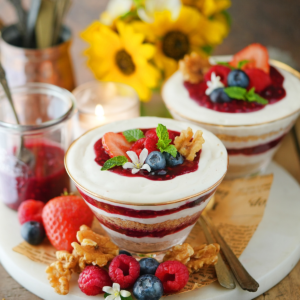
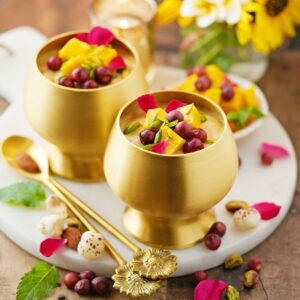
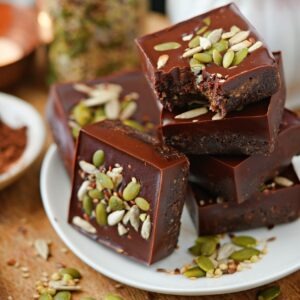
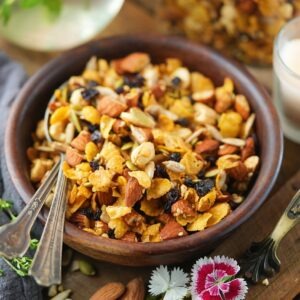
North Indian Street Food Talk street food and it throws up a myriad of colourful pictures in my head. It’s an amazing food group, one that goes deep into culinary cultures and is fast becoming haute cuisine, upmarket and constantly evolving. Yet, hit the streets and you find good old rustic appeal, preserved from the past, especially in the old city areas. You are instantly hit by a culture that time hangs on to. North India is no different; the streets are painted with colour and flavour, heat and dust.North India, Old Delhi Monkeys wander above while cattle languish below, spice sellers plonk themselves under umbrellas sheltered from the sweltering sun, pan walas sit in rows with an engaged clientele. Across the street, chicken tikkas sizzle over red hot coals! The camera works overtime, how much can you possibly capture and, then again,  how much can you blog? As you see, Indian streets are ‘happening’, and Old Delhi holds that eternal charm. North India, Old DelhiThe camera feeds hungrily at as you get transported to a different age. I feel compelled to share some street culture before I go further! A few more pictures … all taken on a day when Mr PAB and I decide to take a train ride into Old Delhi. Didn’t shop, just wandered around clicking, caught up in mixed emotions … North India, Old Delhi We found a water carrier opposite Jama Masjid selling chilled water in engraved silver handmade bowls, the water stored in a stitched and sealed whole goatskin {top left}. Handcarts piled high with plates and plates of neatly sliced pineapple {painstaking job that}… all open air but plenty of takers, dry fruits sold in small sacks, chocolate too{top right}. AMAZING!North Indian & Street Food {Jama Masjid} In North India street food is a quintessential part of our tradition, not always healthy {read nice and deep fried delicious}, and holds eternal appeal. If you literally eat it off streets, with all the heat and dust thrown in, you are bound to be awarded with a Delhi belly, but there are ways of beating that!North Indian Street Food Papdi ChaatWhen Asha, the Fork Spoon Knife gal wrote to me wondering if I would write her a street food themed guest post for her 3rd blogiversary, she heard a resounding YES! After much dithering, I decided on something I could bake, reflective of PABs central theme, and so made the most delicious Papdi / Whole wheat Crackers {if I may say so myself}. I also made some Bhel Puri from a trail mix of sorts! The crackers would make great bases for canapes too, and the trail mix is easily munched on its own.

North Indian Street FoodDo get across to Street Food Month on Fork Spoon Knife for the rest of the post and recipes! Happy 3rd Blogiversary Asha!

Don’t miss a post
Also find me on The Rabid Baker, The Times of India


Cooking| Katchi Biryani … perhaps Hyderabads most renowned biryani

“Biryani is often called India’s signature dish”
Pratibha Karan

Katchi BiryaniThis was an opportunity I wasn’t going to miss. It took a little organising. Mr PAB had to come in early from work to get the kids off the school bus. I had to bake like a mad hatter all morning for the next day was an early  soccer match {read 7.30am reporting time…brrrr}, yet I HAD to be attend the event. It was a demo workshop for Pratibha Karans delicious Indian cookbook, simply called – BIRYANI!biryaniI remember twisting my younger sisters arm almost a decade ago to buy me Pratibha Karans earlier book Hyderabadi cuisine – A Princely Legacy, which at the time cost a princely sum. It is entirely worth owning. Every picture in that cookbook is royal, the commentary steeped in history and culture. Pretty as can be crockery and tableware, with ancient bric-a-brac, used in the photographs, A Princely Legacy is worth every page. I have cooked  from it often, had many questions for the ‘biryani expert’ … which is why I HAD to get to this biryani workshop.Pratibha Karan, BiryaniWith such delicious thoughts in my muddled head, I hopped into a cab and was driven 25 miles in horrid traffic to get to the demo. The event was organised by Perfect Relations & Random House, hosted at  Godrej Nature’s Basket in Defence Colony, South Delhi.

The biryani is India’s most beloved dish — one that has spread to all the four corners of the country and assumed many forms. It originated in the Mughal courts, flowering in the jagirs of Awadh, and it is in Lucknow, Delhi and the small Muslim principalities of north India that one finds the classic versions, subtle, refined, and delicately flavoured. Pratibha Karan gives us not just the definitive recipes from these regions but unearths rare and old dishes such as a biryani made with oranges, Rose Biryani and Kebab Biryani. In the south, the biryani has an equally distinguished lineage, if not more so. There are the blueblooded biryanis of Hyderabad which include gems such as the Doodh ki Biryani, Keeme ki biryani and Bater ki biryani. Away from the royal courts, the biryani has adapted itself into a spicy local delicacy in Tamil Nadu, with many towns like Salem, Aambur, Dindigul boasting of their own signature version of the dish.

Katchi BiryaniPratibha Karan shared lesser known tips of biryani making with patrons of Godrej Nature’s Basket, and took them through the evolution of this mouth watering delight. She offered a blend of culinary, cultural and historical insights of this much loved dish, and shared her ‘Qabooli’ recipe {a vegetarian biryani} with special tips thrown in. The only disappointment was that there was no live cooking demo, which most patrons who attended the workshop expected. Else, it was a pleasure to hear her talk, to feel her passion for biryani and food culture, her eyes glistening with joy. She took questions from curious and enthusiastic foodies, guided them towards making the perfect biryani, sharing her expertise large heartedly. Armed with a copy of her book that Random House generously gave me, I left the workshop feeling uber-confident, ready to win the battle of biryani. {For those who are vegetarians, the book offers a number of delectable vegetarian biryani recipes too}.

Katchi BiryaniIt was just a matter of time and I got myself geared for the challenge. A challenge because I have had some miserable biryani failures of late, and have been cooling my heels on this particular front! I read the book cover to cover, wanted to try so many, and then finally settled for the Katchi Biryani, katchi meaning raw. In the authors words, “This is perhaps Hyderabad’s most renowned biryani. Both the rice and the meat are layered in an almost raw form in the pan. Therein lies it’s unbelievable magic. Many claim Katchi Biryani is th ultimate biryani dish”.Pratibha Karan, BiryaniI was sold, and just had to try my hand at the magic. I reduced the papaya marginally as I marinated the lamb overnight. I planned to ‘throw‘ together my biryani with minimal fuss the next afternoon, after returning from soccer, which is exactly how it went. Good planning {pat myself on the back}, it was a fuss free experience, and we waited with baited breath to see the outcome. Katchi BiryaniIt didn’t disappoint at all. My word, the aroma was great, each grain of rice was separate … I was walking on clouds. Mr PAB exclaimed it was the best ever; he had waited for this for 20 years! Wait no longer. Give this a go. After I made it and got it right, I did read a review on the web to say this was a fiddly biryani to get right. Maybe I’m plain lucky, or maybe I’ve ‘arrived’ on the biryani scene. Whichever way, this was a meal in itself, full of flavour, each grain of rice separate {test of a good biryani}, and tasted even better the next day!

Katchi BiryaniKatchi Biryani
FromBiryani’ by Pratibha Karan, pg 76
This is perhaps Hyderabad’s most renowned biryani. Both the rice and the meat are layered in an almost raw form in the pan. Therein lies it’s unbelievable magic. Many claim Katchi Biryani is th ultimate biryani dish.
Preparation: 25-30 minutes
Marination Time: 5-6 hours
Cooking Time: 1 hour 15 minutes
Serves 8-10
1kg mutton, mix of medium pieces from shoulder, and chops
1tbsp ginger paste
1 1/2 tbsp garlic paste
1 tbsp raw papaya paste {skin & pulp ground fine together}
‘A
4 onions, finely sliced {about 300gms}
15 green chillies, ground {I used 3 chopped, and 2 whole}
1/2 cup fresh coriander leaves, chopped
1/3 cup fresh mint, chopped
1 tsp garam masala
500gm yogurt, whisked
Juice of 3 limes
650gm long grain rice {I used basmati}
A liberal pinch of saffron soaked in 1/2 cup warm milk
2 tbsp ghee
150ml refined oil
Salt to taste
Katchi BiryaniMethod:
Wash the mutton, and drain well. Add ginger, garlic and papaya paste to the mutton, and rub in well. Set aside.
Heat 150ml oil, and fry the sliced onions in this until golden brown. remove from oil, cool a little, and then crush by hand.
Add the crushed fried onions, remaining oil that the onions were fried in, and the remaining ingredients of ‘A’ to the meat. Add salt to taste, mix well and leave to marinate for 5-6 hours. {I reduced the papaya paste by a 1/4 tbsp, and left my meat to marinate in the fridge overnight}
Rice
Wash the rice well. Soak for 20minutes. bring 3 1/2 ltrs of water with salt and 1 tsp oil to a boil. Once the water bbegins boiling, add the rice and cook for about 3 minutes, until 20% done. Drain immediately, and transfer rice to a flat pan.
Assemble & serve:
Transfer the marinated meat to a heavy bottomed large pan, and place over high heat. Stir until it comes to a boil, then cover and cook for about 10 minutes. Add a cup of water, and when it comes to a boil again, lower the heat and spread the partially cooked rice over the meat in a uniform layer. Cover with a tight fitting lid, and place a heavy weight/ stone over it to prevent the steam from escaping. Cook on ‘dum‘ for about half an hour. {I cooked mine for 25 minutes}.
Open lid, sprinkle the saffron milk over the rice, dot with the ghee, and cover once again with a tight fitting lid. Cook on very low heat for about 15 minutes, until the rice and meat are done and steaming hot. {I did the second 15 minutes of ‘dum’ cooking with a griddle under the pan. }
To serve, take out the biryani in large chunks from the sides without mixing to retain it’s multi-hued glory. Serve steaming hot.
Note: I grind a small green papaya, skin included, and freeze it in an ice tray. I keep the frozen cubes in a zipbag, and use 1 cube for 1 tbsp when required.

♥ Thank you for stopping by ♥
Katchi Biryani

Don’t miss a post

Also find me on The Rabid Baker, The Times of India

Feature| Vintage Indian Pots & Pans … journeying into culinary culture!

“Each culture is known by it’s culinary traditions”
Abdul Haleem Sharar

Vintage Indian Pots & PansThis is not a recipe post, yet a culinary one … with a little bit about the hert of New Delhi, some vintage looking pots and pans, and a dash of colour. A misty winter afternoon visit to New Delhi, or Lutyen’s Delhi as it is referred to, is never complete without a  drive up Raisina Hill which leads to the gates of the Indian Presidents house or Rashtrapati Bhavan. Lutyens’ Delhi is an area in New Delhi named after the leading British architect Edwin Lutyens. He was responsible for much of the architectural design and building when India was part of the British Empire.New DelhiWith Edwin Lutyens, Sir Herbert Baker was instrumental in designing New Delhi. The North & South Block on either side of the Rashtrapathi Bhavan or Presidents Estate were designed by Sir Herbert Baker who contributed beautiful lotus motifs, elephants and Mughal chhatris or kiosks. There are four sandstone columns surmounted by a bronze ship sailing east, two in front of each blocks representing the dominions of the British empire namely Canada, Australia, South Africa and New Zealand. {A great read is Patti’s post Our India Adventure from A to Z about her recent India visit on Worth The Whisk. She’s captured the spirit of this beautiful country in her post, followed by one on food.}

Raisina Hill, Lutyen's Delhi For me, no visit is also complete without a mandatory stop at Tashi’s shop in the Tibetan Market on Janpath, translated as ‘People’s Path’, one of the main roads in New Delhi’s commercial district. I endeavor to buy at least a couple of things from this quaint and intriguing  little shop on each visit, an attempt to build my culinary bric-à-brac while the kids stamp their impatient feet! Doma Copper Brass, New Delhi

A very pleasant young man, Tashi Nima, runs his shop, Doma Copper Brass, with a passion. He knows his stuff & his prices are fixed. He has his suppliers, & is known to supply a lot of people with Indian/sub continent bric-a brac. The wares move fast & he sells a mix of old & new culinary items. Everything is handmade, including the handles, rivets , latches etc. The wares aren’t antique, but do date back to the 1910′s etc, & the artistry is entirely mesmerizing.

bric-à-bracTashi Numa  now recognises me and each time I stop by, he mischievously dissuades me from buying up his whole place. I have to keep asking him not to show me new stuff, tempt me with pans I find irresistible etc. This time Mr PAB was with me and he  just isn’t the shopping kind. He accompanies me if I ask him too, but doesn’t have the patience of a seasoned shopper… but Tashi and his Aladdin’s cave had Mr PABs eyes light up like a gazillion stars!Vintage Indian Pots & Pans - my collectionHe took roots in the shop, spellbound by the young mans stories.  Tashi knows the history behind where each piece comes from, the rough time period it belongs to, the uses in that day and age, why it had been given a tin or silver cladding … fascinating! He treats each piece as his baby, talking about the origins lovingly, patiently, passionately and with in-depth knowledge! Every thing I gathered on the table had to be bought declared Mr PAB. I was horrified and Tashi knows me. He jokingly said, “Yes don’t force her. You still need money for lunch!!” Mr PAB emptied his wallet {Tashi accepts cash only} and said ‘We’ll take it all!He LOVED the place, the nostalgia, the journey back in time, the rustic ambience…Vintage Indian Pots & Pans-my collectionI came back thrilled with my battered looking collection. There is rustic charm in these vintage pieces, each piece holds a tale, a story, a reflection of time gone by! Just talking to Tashi, one gathers priceless bits of information. The vessels that come from the North Eastern hills are simple, while the ones from the plains have intricate patterns worked on them, as do some from Kashmir.  My copper frying pan has the artists name engraved on the bottom, a feeling of belonging, a pride in his artistry.

In the field of metal work a variety of styles are seen in different parts of India. In the Ladakh area of Kashmir traditional vessels are made out of iron and brass. Many richly engraved traditional household items like bowls, samovars, plates and trays are also made in Kashmir. In “Naqasi”, elaborate floral and calligraphic designs are imprinted on copper and silver items. These items are then oxidized, which makes the design to stand out from the background.

Vintage Indian Pots & PansMost copperware was clad in metal. The poor would clad their utensils with tin, and the rich with silver. The plain looking simple vessels with just usability as their main feature belonged to the common man, while the intricately worked, domed dishes like serving dishes belonged to the rich, the upper classes,  a reflection of the socio-economic system that prevailed in India centuries ago. Just fascinating how much you can learn about a people and it’s culture from mere utensils! Going back in time, in many ways, the Indian society and its cuisine was as diverse as the utensil it was served in!Vintage Indian Pots & Pans - my collectionMost of the wares are dated back 50-100 years, so aren’t a 100% safe for cooking in. Some have lost their cladding, while others look like they were never clad! As Tashi says, most of them are good to use for boiling water, or for serving non-acidic stuff in {e.g. tomato based gravies can react with the metal if kept for an extended period of time}. I buy them just for quick culinary photo shoots and importantly to add charm to my kitchen.  Just  having them surround me fills me with a strange sense of comfort, connect & unexplained nostalgia. There is so much power in food@pennydelosantos via twitter!Vintage Indian Pots & PansTell me dear reader, do you have favourite shops like these that haunt you and call your name? Are you tempted to buy old rustic culinary ware? Do you find them as charming and comforting as I do? If shipping wasn’t that steep,  if metal wasn’t that heavy, I would happily start an Etsy store and help others build a collection too … if!!

“If wishes were horses
Beggars would ride:
If turnips were watches
I would wear one by my side
And if ifs and ans were pots and pans,
The tinker would never work!”

Vintage Indian Pots & Pans♥ Thank you for stopping by ♥

Don’t miss a post
Also find me on The Rabid Baker, The Times of India

Related Posts Plugin for WordPress, Blogger...